The Old Fashioned Way: rebuilding muscle not just losing weight
Tags: #EbikeTraining, #AgeAndEndurance, #Sarcopenia, #TourFit2027
Two years ago, I learned by experience how not to lose weight. I followed a generic "calorie deficit" plan. The scale worked: the number went down. But so did my muscle mass. I felt weaker, had less energy and abilities, and realized I had given up a healthy old age for a lower number. That became the warning that shaped my current path.
Today, at 69 years old, I am training for the Baltic to Spain e-bike tour—a 4,500 to 5,000 km journey planned for summer 2027 when I'll turn 70. My focus is not on having less weight; it is being stronger, more capable. I am choosing the "old fashioned way": disciplined training, strategic nutrition, and patience. You are helping me with this by keeping me motivated as I report to you my honest numbers (as they go up or down). I don't want to be seen as a failure.
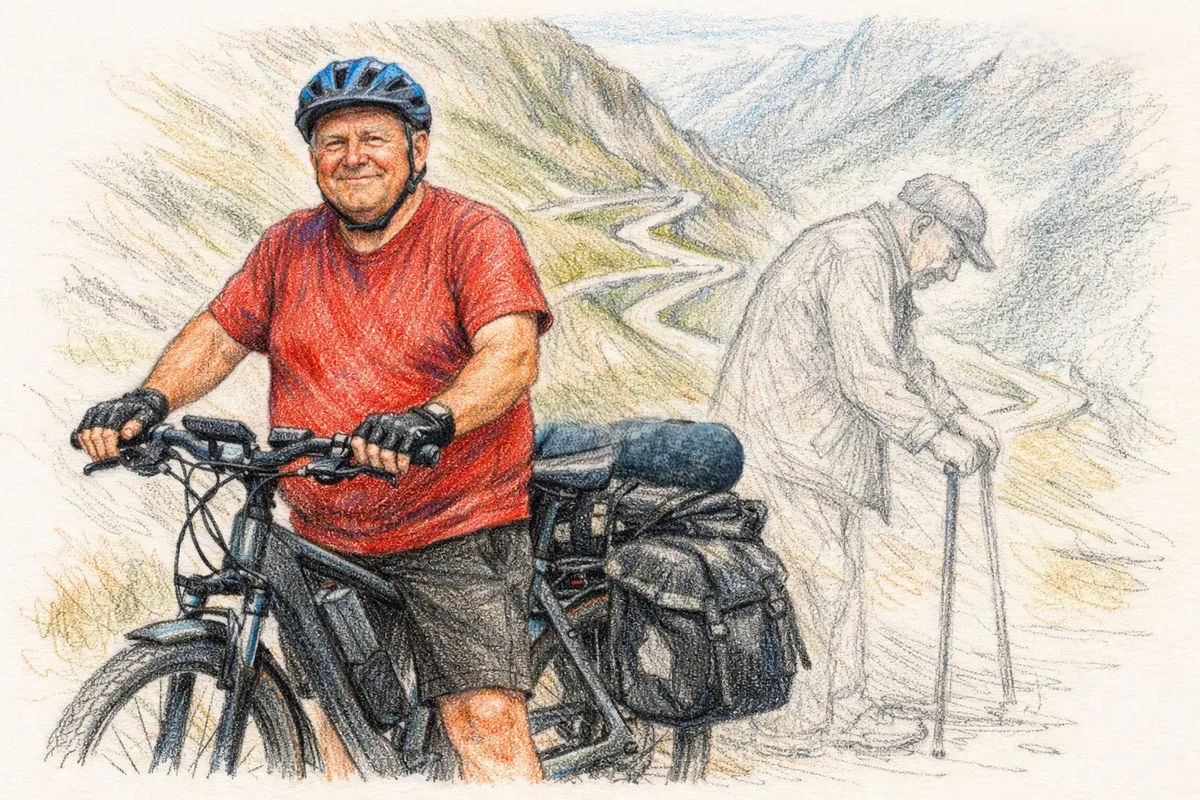
The Trap of Quick Fixes
In the current wellness landscape, pharmacological shortcuts like GLP-1 agonists (e.g., semaglutide, tirzepatide) are increasingly popular for weight management. While these medications can be effective tools for some individuals under strict medical supervision, they are not the right choice for my objectives.
My concern centers on sarcopenia—the age-related loss of muscle mass and function. Rapid weight loss, whether induced by drugs or severe dieting, often results in the loss of lean tissue alongside fat. For an older adult, preserving muscle is not just about aesthetics; it is about metabolic health, joint stability, and independence.
Research published in JAMA Internal Medicine and supported by the American Geriatrics Society highlights that without concurrent resistance training and adequate protein intake, significant weight loss interventions can lead to disproportionate muscle loss. A study in The New England Journal of Medicine regarding semaglutide noted that while participants lost substantial weight, a significant portion of that loss came from lean mass, underscoring the critical need for strength preservation strategies during treatment.
I am not using these drugs because my priority is functional capacity, not just a smaller waistline. I need the muscular endurance to ride a loaded bike over mountain passes, the strength to lift it onto a train or up stairs, and the balance to stay upright over uneven or slick trails. A pill that shrinks me but weakens me would be counterproductive.
The Method: Strength Over Scale
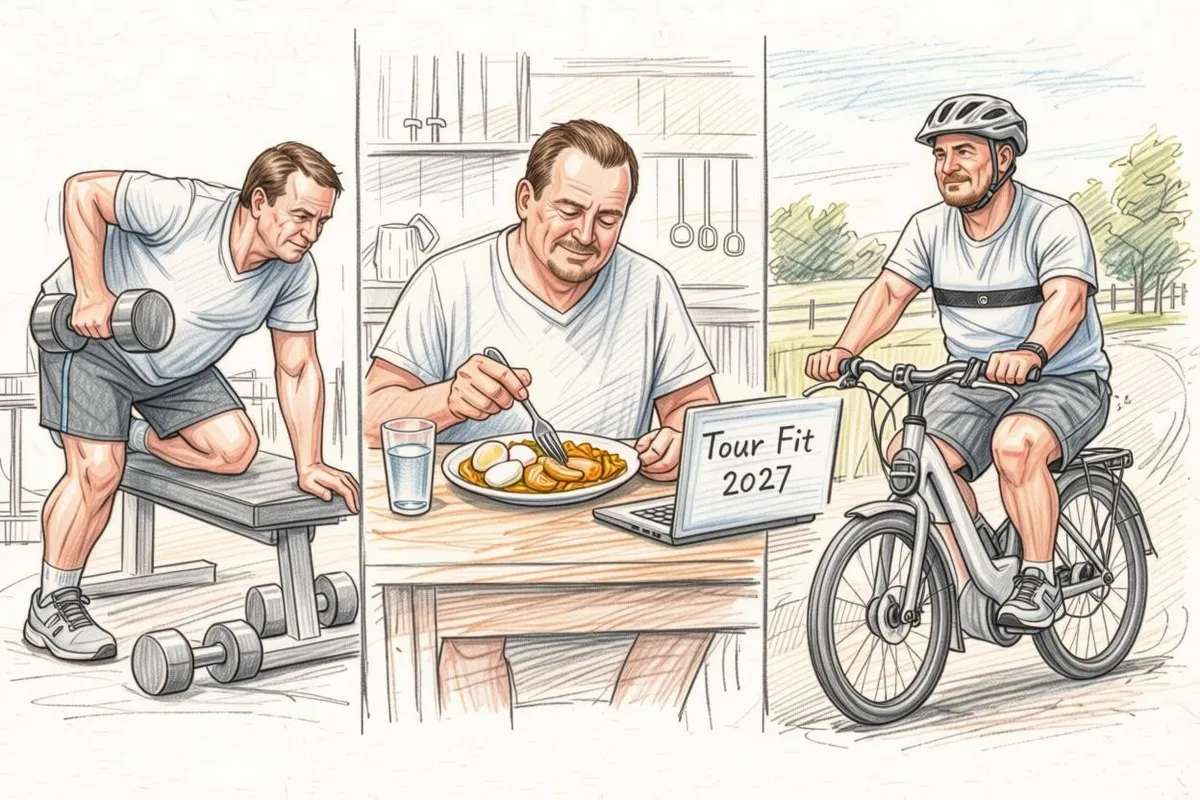
My current program, Tour Fit 2027, prioritizes ability over appearance by:
- Resistance Training: I lift weights twice a week. My routine includes dumbbell presses, rows, and core stability work. The goal is to maintain a muscle mass floor of roughly 57 kg.
- Strategic Nutrition: I prioritize protein intake (1.4–1.6 g/kg of body weight) to prevent muscle breakdown during training.
- Endurance Specificity: I ride my e-bike in Zone 2 (steady, conversational effort) to build the aerobic engine without burning out. The e-bike is a tool for training, allowing me to sustain longer durations at safe intensities, not a shortcut to avoid effort.
The Evidence: What the Data Shows
Since restarting my training in September 2026, the numbers tell a story of stabilization and improvement, distinct from the muscle loss I experienced two years ago.
- Weight: Down ~1.2 kg in 3 weeks (from 85.35 kg to ~84.1 kg). This is steady, sustainable, and controlled.
- Muscle Mass: Stabilized at ~56.8 kg. After an initial scare where I saw a drop, I adjusted my hydration and protein focus, and the muscle held firm.
- Performance: My VO2max has improved to 38–39 ml/kg/min. My resting heart rate has dropped to 51 bpm.
- Functional Metrics: My single-leg balance test remains at 30 seconds, with a goal to reach 45 seconds by spring 2027.
The "muscle scare" of early October taught me a vital lesson: tracking waist circumference (currently 95.5 cm, down from 98 cm) is a better indicator of fat loss than weight alone.
I am focusing on what my body can do, not just what it weighs.
Aging is about Facing New Challenges - Leveling UP!
Aging is about adapting, doing things differently; it's not slowing down. Building muscle is the single best investment for healthspan. It protects joints, improves metabolism, and keeps us independent.
To anyone reading this who is tempted by quick fixes: understand that if you desire a healthy long life, the cost of muscle loss may outweigh the benefit of rapid weight reduction. There is no shame in taking the slower, harder road if it leads to a stronger finish line but more importantly having the endurance to complete a longer track.

Join the Journey
I invite you to focus on what your body can do rather than what it weighs. Start with one walk, one strength session, one extra serving of protein. Join me as I ride 5,000 km to prove that it’s never too late to get stronger.
References:
- Wilding JPH, et al. "Once-Weekly Semaglutide in Adults with Overweight or Obesity." New England Journal of Medicine. 2021;384:989-1002. (Discusses lean mass loss in weight reduction trials).
- Morley JE, et al. "Sarcopenia: Diagnosis and Treatment." Journal of the American Medical Directors Association. 2011. (Establishes the importance of muscle preservation in aging).
- American Geriatrics Society. "Healthy Aging in Action: Sarcopenia." (Guidelines on preventing muscle loss in older adults).
- Wong M, et al. "Weight Loss and Muscle Mass: The Role of Resistance Training." JAMA Internal Medicine. 2023. (Analysis of body composition changes during weight loss interventions).
This is a personal journal, not a commercial blog. No trackers, no ads.
First Introduction Post: The Idea and the Journey
All Blog Post
Disclaimer: This blog post reflects my personal training journey and does not constitute medical advice. Consult your physician before starting any new exercise or nutrition program.